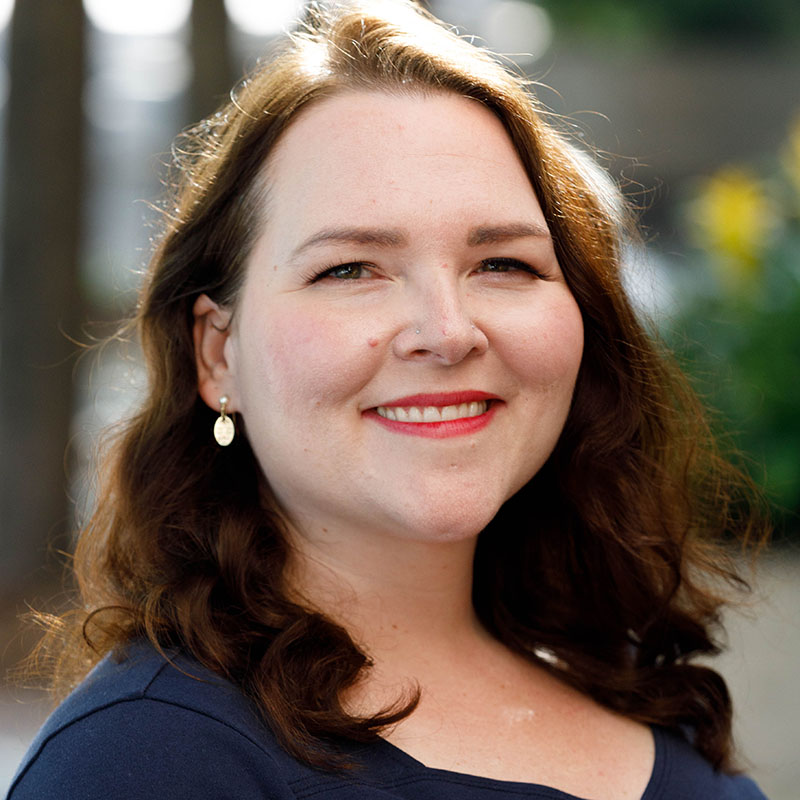
“It feels like we’re setting the record straight,” said Dr. Muessig, whose research is uncovering the historic role of women’s preaching. As Chair of Christian Thought at the University of Calgary, Dr. Carolyn Muessig undertakes a great deal of public engagement and, naturally, academic research. We interviewed Dr. Muessig seeking to learn about the areas of her work that are most exciting to her and to find out where the energy and activity currently live in her work. This line of inquiry led to Dr. Muessig telling us about her intriguing and impactful research into the history of female preaching within the Christian church.
Dr. Muessig relayed to us how her work is challenging previous conceptions around the role of women in the pre-modern church. So far, her work has already uncovered numerous stories of women preachers dating back hundreds of years which have been largely forgotten in the intervening years.
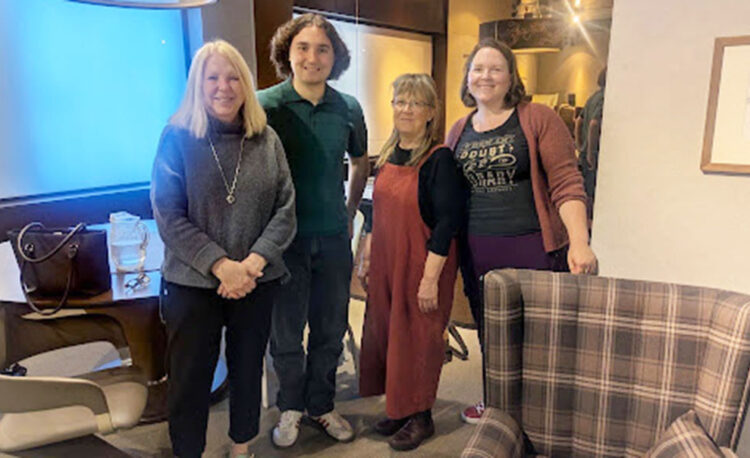
Over the course of our discussion, she shared examples of some of the figures involved in women’s preaching across hundreds of years, from the 15th-century Italian nun to more recent African American women who communicated their sermons in the form of quilted blankets. Interest in the idea that sermons can be expressed in physical art as well as through verbal communication led Dr. Muessig and three students from the University of Calgary to join a women’s group at Grace Presbyterian Church to experience quilt-making today, gaining a greater understanding of this form of religious expression.
Dr. Muessig told us that she hopes to expand her research beyond the pre-modern period into the contemporary. She acknowledged that the place of women in church teaching positions remains controversial, with difficult conversations occurring especially across North America’s churches. As a result, Dr. Muessig commented on how her courses at the University of Calgary have been received by the young women taking them. “I was really thrilled that my interest in 16th-century and 15th-century women made a difference for women today,” she told us, speaking of how the topics shared in her class supported students with conversations in their own religious communities.
For her future work to be as successful as possible, Dr. Muessig told us that she needs community members, both in the academy and in outside religious communities, to keep an open mind, allowing for a richer and more collaborative approach to the subject. She told us that she hopes her work will challenge assumptions and broaden the discourse on women’s preaching.