“We decided to really go for it.”
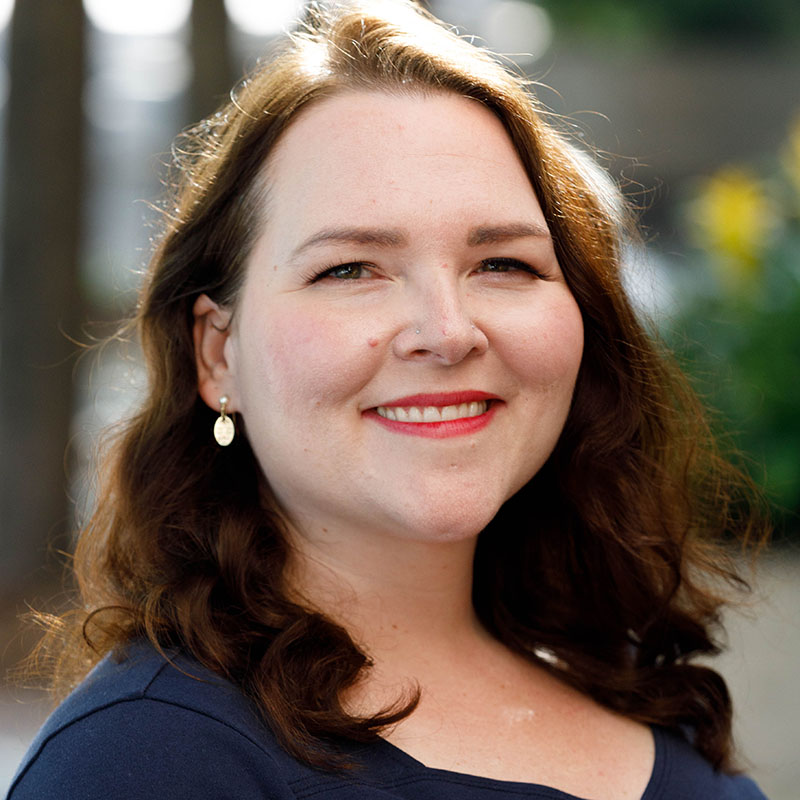
Rev. Debra Faulk recalled the early days of the Calgary Interfaith Council and the determination of its members to build a stronger interfaith community in Calgary. We spoke to Faulk, a Unitarian minister and longtime advocate for interfaith dialogue, about her role in CIC’s beginnings, the relationships built through its work, and her continued work in the Unitarian community.
Faulk arrived in Calgary in 2010, having previously served on the board of the Toronto Interfaith Council and soon became involved with the then Metro Alliance for the Common Good, now Calgary Alliance for the Common Good. While some bilateral interfaith dialogues already existed in Calgary, Faulk recalled that “there wasn’t a collective.” The emerging council sought to change this by building “faith community communication and integration and relationship.”
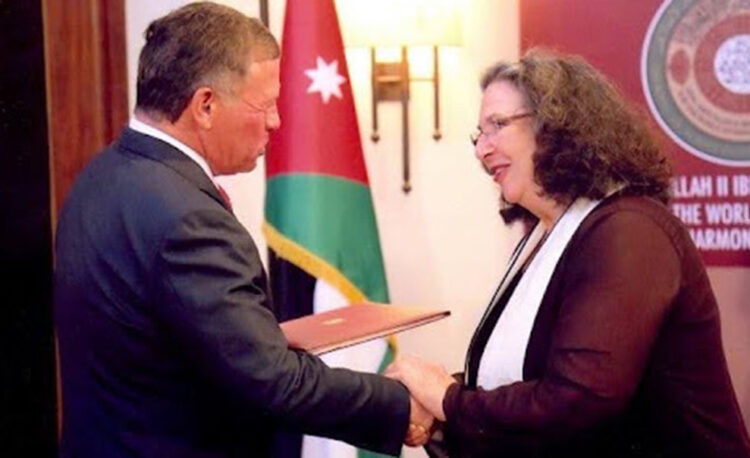
One of CIC’s defining early initiatives from the beginning has been World Interfaith Harmony Week. Drawing on her previous interfaith work, Faulk brought the idea to what she jokingly described as the “motley crew” organizing the council. Their efforts ultimately received international recognition with a gold medal from the World Interfaith Harmony Week initiative. Faulk told us that travelling to Jordan to receive the award on behalf of CIC was “one of the pinnacles of my life.” Faulk also recalled an opening ceremony at Calgary City Hall where representatives of different faith traditions each offered a prayer before adding a piece to a jigsaw puzzle depicting the Calgary skyline. “It was just such a very vivid example of how it takes everybody to build it,” she explained.
Other memories included Habitat for Humanity projects and interfaith potlucks where participants were deliberately seated alongside people of different faith traditions. Opportunities for “breaking bread” allowed people to meet others they “wouldn’t get to rub shoulders with any other time or any other place,” Faulk told us.
For Faulk, the goodness of relationship-building was accompanied by the challenge of ensuring that the council truly represented Calgary’s religious diversity. She frequently found herself reminding others that “Christian isn’t the only tradition,” and, today, continues to encourage CIC to “decenter Christian perspective.” She remembers the difficult work of accommodating communities with very different perspectives and finding “the common understanding or common initiative” around which they could work together.
Today, that purpose continues through Faulk’s work with the Canadian Unitarian Council, which is reimagining how religious communities can respond to changing patterns of participation and belonging. She is particularly interested in collaborative approaches to ministry and community. “We need to go back to community. We need to go back to collaborating,” she told us, describing new programs in which ministers work cooperatively to support smaller congregations.
Looking back on CIC, Faulk described herself as having been “part of a legacy that continues.” Seeing the organization endure has affirmed for her that what its early members built had “a solid enough foundation” to carry forward. Her advice to those continuing that work is to recognize its importance, build relationships across differences, and “lift up commonality rather than division.”