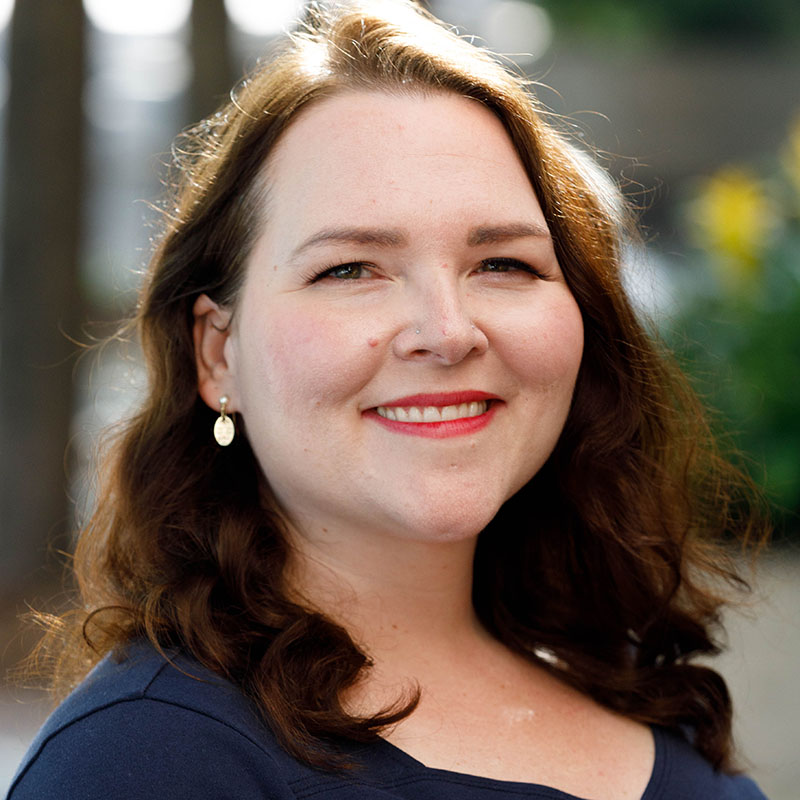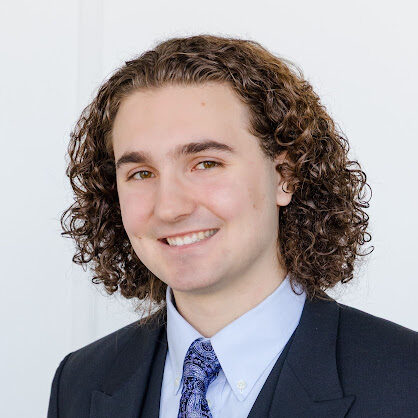
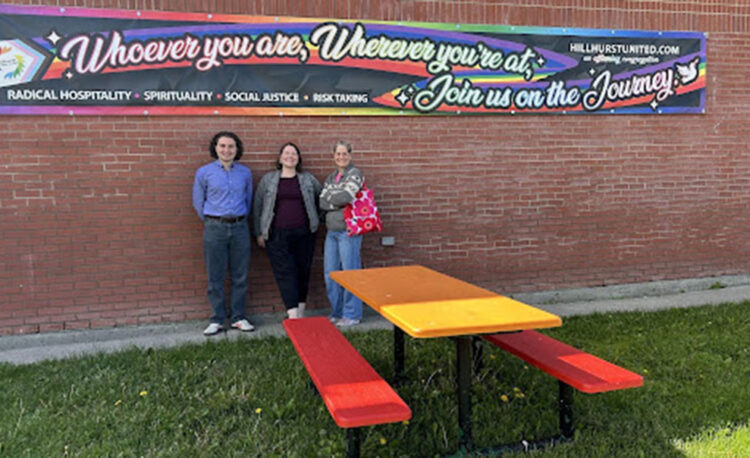
“What are we doing at church if we’re not engaging with the world?” This question lies at the heart of Jenny Saarinen’s work at Hillhurst United Church. We spoke to Saarinen, who recently took on a role supporting Hillhurst United’s social justice ministries, about the wide range of work being done within the church and her hope to involve more of the congregation in putting its values into action.
Saarinen’s role spans six areas of social justice ministry: right relations, climate justice, refugee sponsorship, support for asylum seekers, affirming work, and Hillhurst’s involvement with the Calgary Alliance for the Common Good. Across these ministries, she supports groups of volunteers while acting as “a conduit between the general congregation, the staff, and the board” and those carrying out the work.
Among these ministries, Saarinen is particularly interested in work that takes Hillhurst United beyond its own walls. Through the CACG and CIC, Saarinen highlighted that the church can work alongside other faith communities and organizations on shared concerns. She recalled attending a CACG gathering where an imam, a rabbi, an Indigenous woman, and a Christian each offered prayers. “We don’t have to agree on everything,” she reflected, but people can “respect one another’s differences” while coming together to do “really important work for the greater good.”
That same concern for relationships extends into Hillhurst United’s right relations ministry, which focuses on reconciliation. Saarinen described reconciliation as particularly important work for Christians given the church’s history with Indigenous peoples. Alongside educational initiatives, the right relations group is creating opportunities for direct engagement, such as a recent visit to Blackfoot Crossing on the Siksika reserve. Saarinen hopes as many congregants as possible will participate and experience these sorts of initiatives for themselves.
Another rapidly growing ministry supports asylum seekers arriving at Hillhurst United, most of whom Saarinen described as LGBTQ+ people fleeing countries where they have faced discrimination and violence for their identity. Their arrival presents both an opportunity and a challenge for the congregation: “How do we truly welcome these people that are coming?” Saarinen asked, and, more importantly, “how do we make sure that our community is genuinely including these newcomers?”
Hillhurst United’s other ministries similarly combine education with action. Its climate justice group connects congregants with environmental work beyond the church, while its refugee ministry is currently awaiting the arrival of three sponsored families. For Saarinen, these different efforts reflect the many forms social justice can take and the responsibility of a faith community to remain engaged with the world around it.
Looking forward, Saarinen hopes to make these ministries an even more visible part of congregational life. Around forty-five volunteers currently participate across the six areas. “What if we doubled that number?” she wondered. She hopes regular social justice updates and opportunities to hear directly from those involved will remind congregants that “there’s a place for them to be involved” and that social justice remains “an important pillar” of Hillhurst United’s identity.
For Saarinen, this work ultimately comes down to relationships. Her first months in the role have largely involved meeting volunteers and community partners, hearing their stories, and making connections. “It’s all about relationships,” she told us. Through those relationships, Saarinen hopes to connect more people with what she calls “that important part of good religion”: working across differences, welcoming those at the margins, and bringing a commitment to social justice beyond the church’s walls.